A first import order is where most avoidable problems happen: a leather colour that was never written down, a container booked too small, a customs broker waiting for a document nobody asked for. This checklist follows an order from specification to unpacking. Where we give figures, they come from the published packing data of our own range; where a rule depends on your country, we say so — check those points with your freight forwarder or customs broker.
1. Lock the specification in writing
For every model on the order, the written specification should list:
- Model name and code, and the quantity.
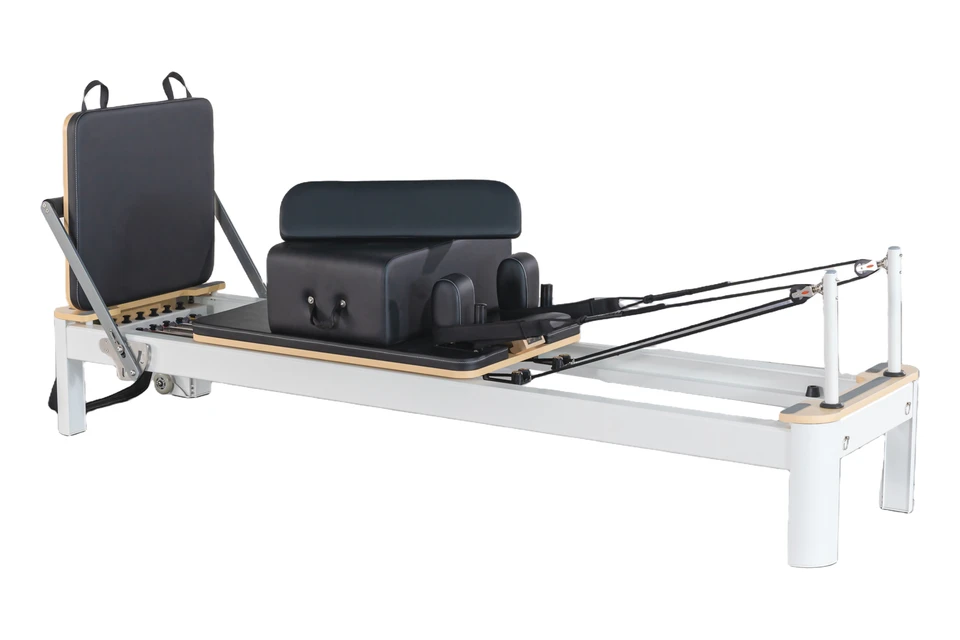
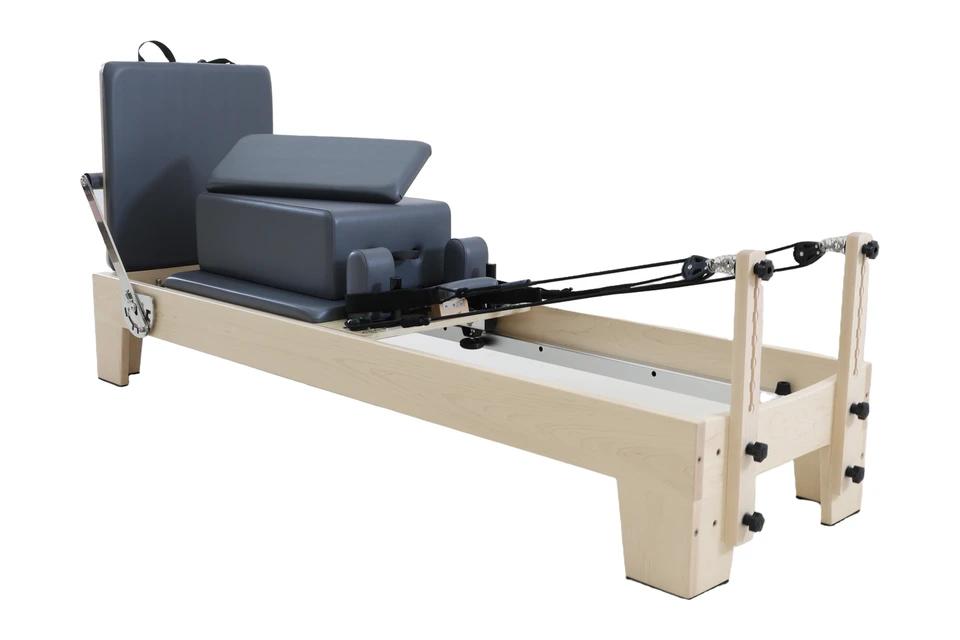
- Frame material and colour — for example maple, oak, walnut, or aluminium in anodised silver, cold grey, black or white.
- Leather colour, plus foam and spring tension level if they differ from standard.
- Any change to dimensions, and any logo, with placement and size.
- What is included with each machine.
For custom or private-label work, approve a sample first. Our process is a written specification and quotation, then a sample for approval, and the specification signed off in writing before anything is cut. If something is not on the signed specification, assume it will not be on the machine.
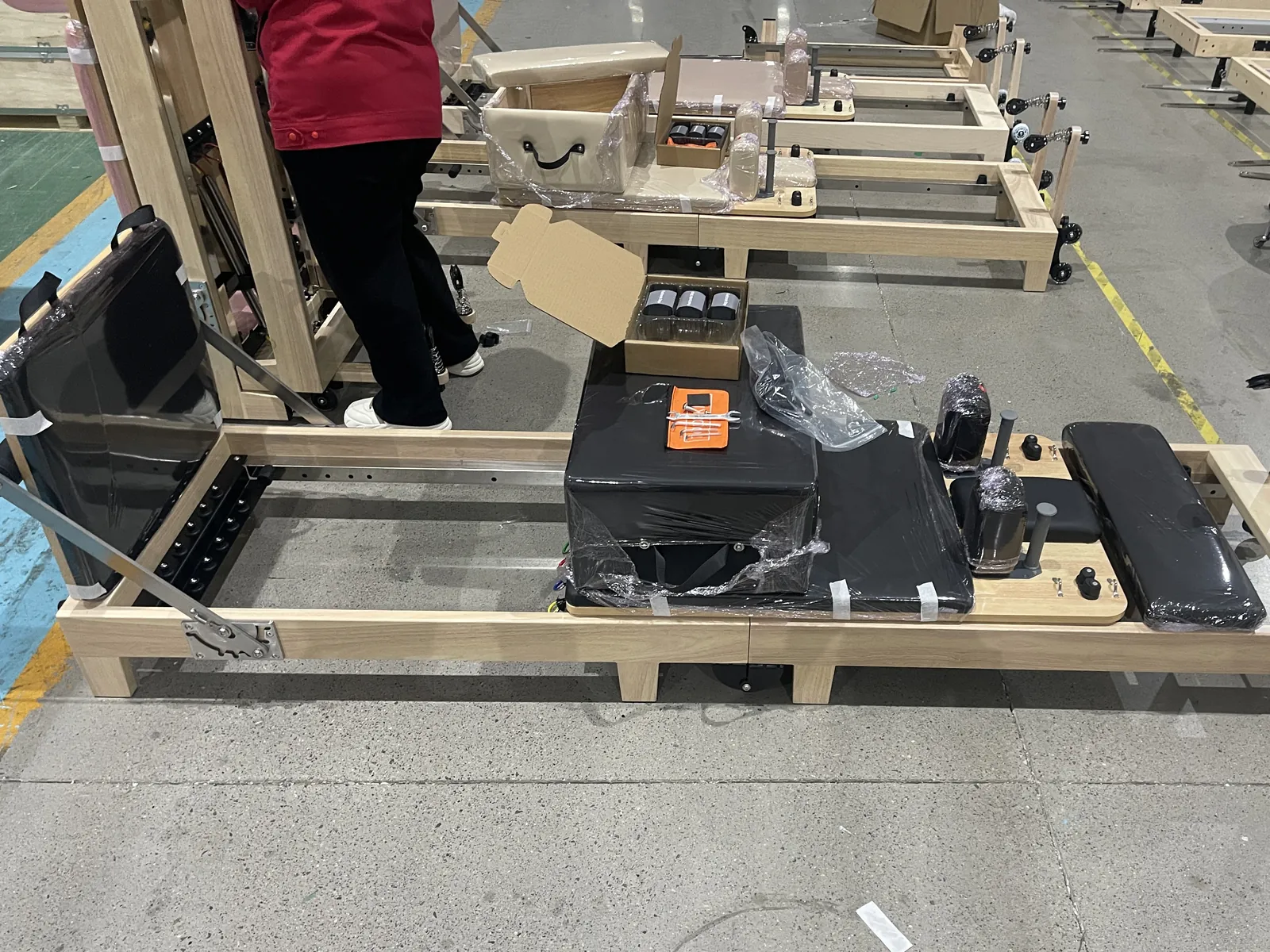
Ask to see the finished goods before they are packed. Before packing, we send photos and video of the finished products so you can confirm colour, logo and details while changes are still easy to make.
2. Work out volume and weight from the packing data
Your forwarder needs the packing dimensions and gross weight of each item, not the assembled size. They can differ a lot: foldable reformers are packed folded, and some larger machines ship partly disassembled. A few examples from our range:
| Model | Packing size (mm) | Volume | Gross weight |
|---|---|---|---|
| Fourth-Generation Aluminium Alloy Reformer | 2,590 × 740 × 500 | 0.96 m³ | 102 kg |
| Maple / Oak Reformer | 2,405 × 760 × 535 | 0.98 m³ | 115 kg |
| Maple / Oak Foldable Reformer | 1,300 × 730 × 570 | 0.54 m³ | 88 kg |
| Maple / Oak Cadillac Reformer | 2,300 × 760 × 480 | 0.84 m³ | 118 kg |
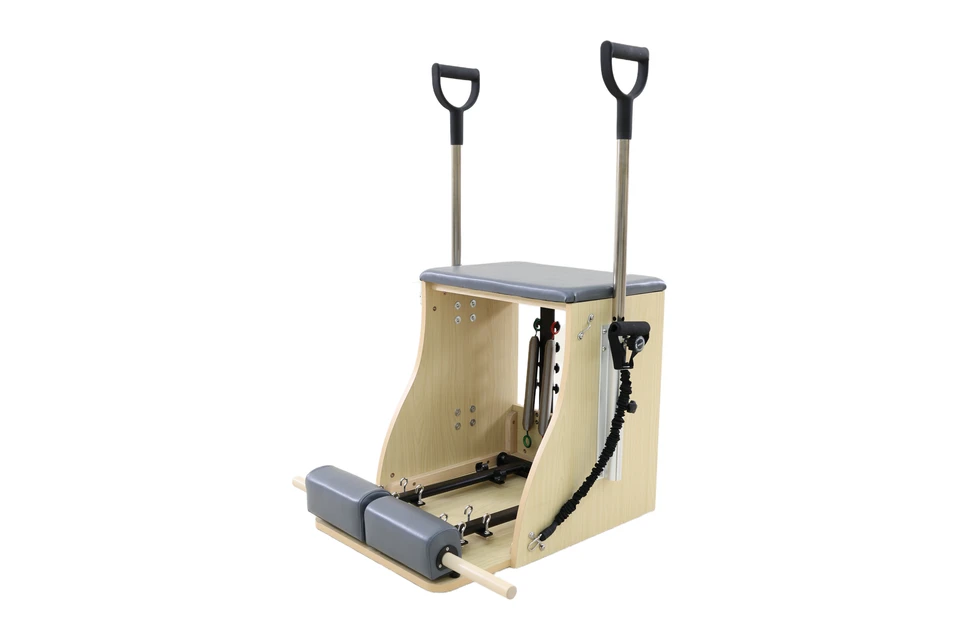
| Maple / Oak Wooden Wunda Chair | 850 × 720 × 750 | 0.46 m³ | 46 kg |
| Maple / Oak Wooden Ladder Barrel | 1,220 × 680 × 1,120 | 0.93 m³ | 61 kg |
Packing data for every model is listed in the specification table on its product page.
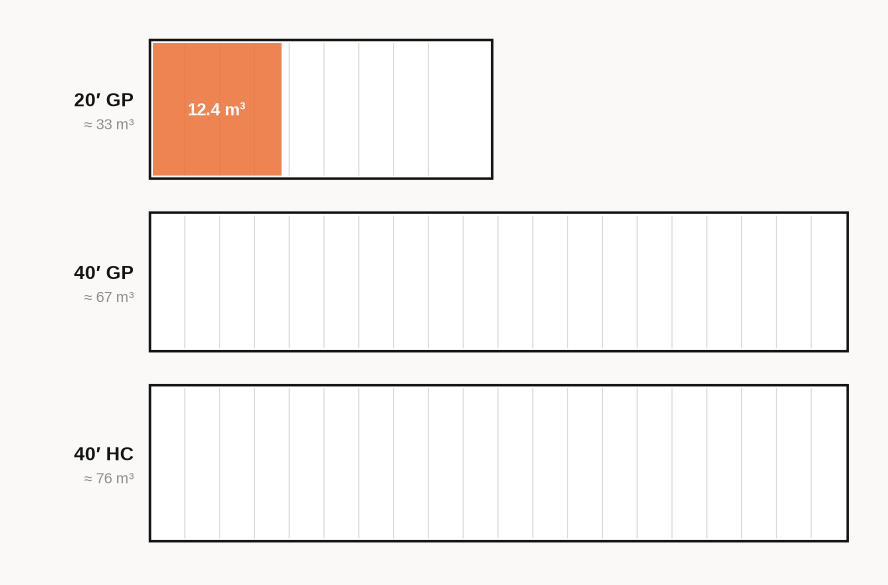
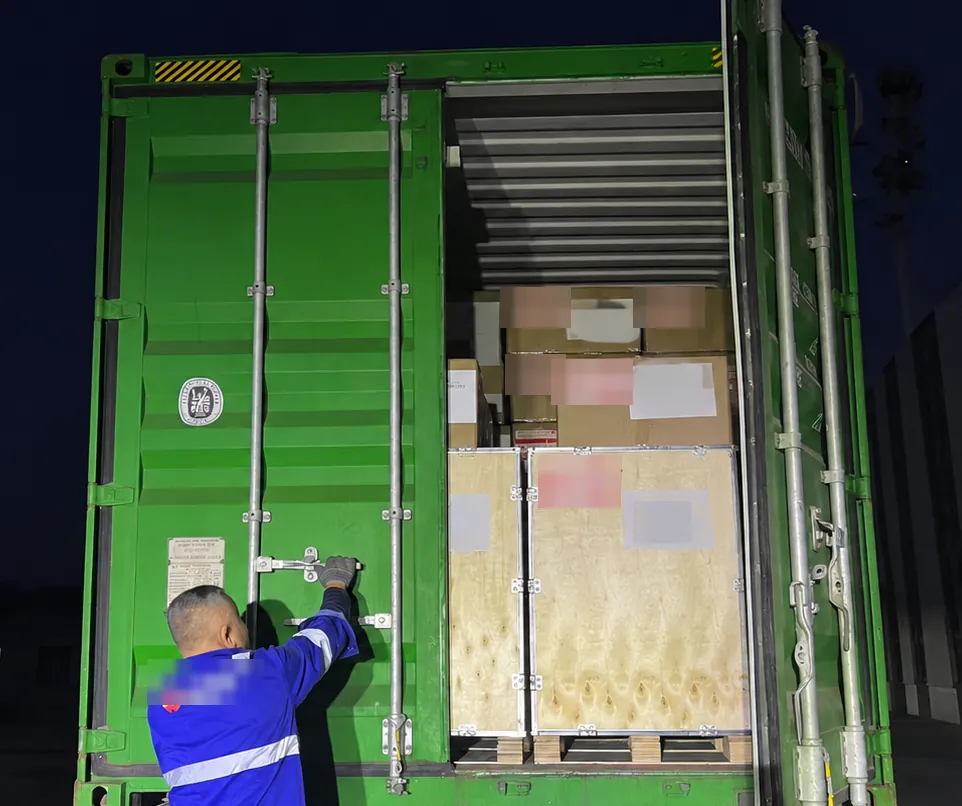
Two practical points. Reformer packages are 2.3 to 2.6 metres long, so the way they are oriented inside the container matters. And for this kind of equipment, volume usually fills up long before weight becomes a limit. If your first order is small, shipping it as part of a shared container (LCL) instead of booking a whole one can make more sense.
3. Packaging and wood rules
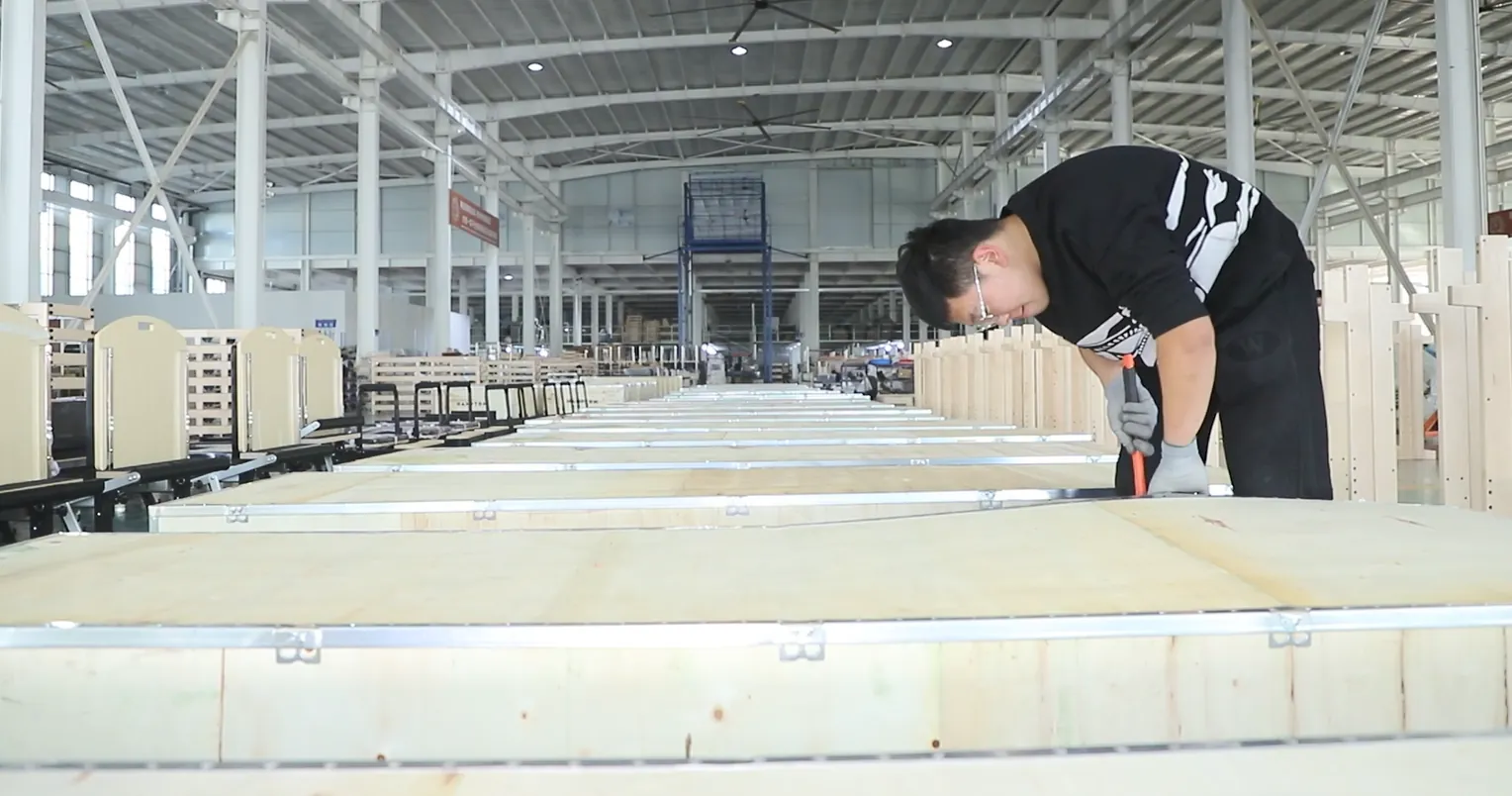
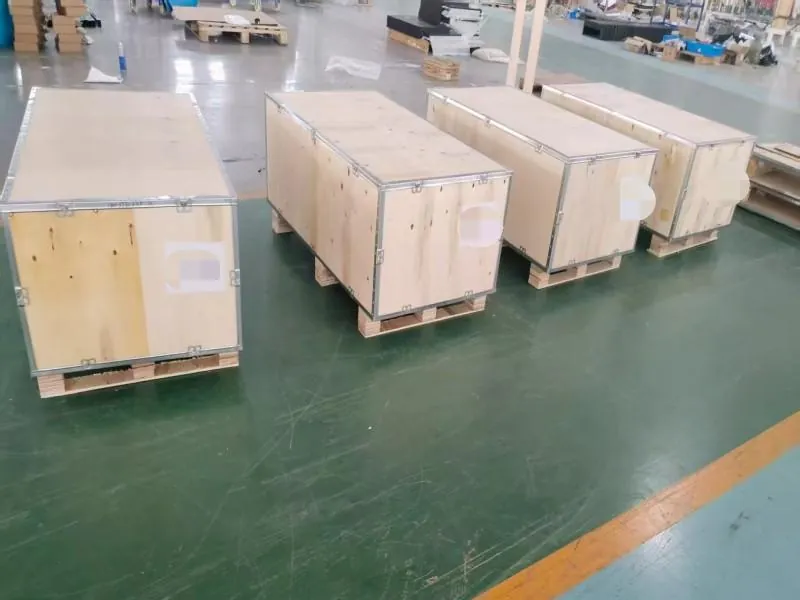
Ask how each item is packed. In our range, chairs, barrels and spine correctors ship in wooden crates; packing for other models is listed per model.
Many countries apply the international standard ISPM 15 to solid-wood packaging: crates and pallets must be heat-treated or fumigated and carry the official mark, or they can be held at the border. This applies to the packaging, not to the finished wooden equipment inside it. Our wooden crates are heat-treated or fumigated for export. Check with your broker whether your country has further requirements for packaging.
4. Agree the documents before the goods leave
For customs clearance you will normally need a commercial invoice, a packing list and the bill of lading, and depending on the destination a certificate of origin. Ask your broker for the full list for your country before the goods ship, and ask the supplier for the HS code they will use. We supply packing lists, test reports and HS codes on request.
Product compliance is a separate question from customs. Our equipment is tested to the EN ISO 20957 series of fitness equipment safety standards, and the declaration of conformity and third-party test documentation are available on request. If you will sell in the European Union, note that the General Product Safety Regulation (EU) 2023/988 has applied since 13 December 2024 and requires a responsible economic operator established in the EU for consumer products placed on the EU market — often the importer. Check your obligations with a compliance adviser; this article is not legal advice.
If you need an FSC-certified order for maple, oak or walnut equipment, ask for the FSC claim and our certificate code (DCI-COC-001154) to be stated on the invoice.
5. Terms, payment and timeline
- Incoterm — agree it in writing. It decides who books the freight and insurance, and where the risk passes from seller to buyer. We can work on any Incoterm from EXW (you collect from our factory) through FOB and CIF to DDP (delivered to your address with import duties paid), so choose by how much of the shipping you want to manage yourself.
- Payment — we work by bank transfer (T/T). Agree the payment schedule in writing with the order.
- Production time — in-stock models ship in 5–10 days; custom orders are scheduled once the specification is confirmed, and the lead time is quoted with the order.
- Transit time — ask your forwarder for the current sailing time to your port, and add time for customs clearance and local delivery.
- Inspection — we send photos and video of the finished products before packing; buyers are also welcome to audit our factory, or to appoint an independent inspection company to check goods before they ship.
6. When the container arrives
Inspect the goods on arrival and photograph any damage to packaging or equipment before it is unpacked further. Report damage with photographs and we arrange replacement parts. Keep the original packaging until the inspection is complete. Ask for the assembly guide for each model before delivery so your team is ready to set up; we send them per model on request.
The checklist
- Written specification for every model, signed off — sample approved for custom work.
- Photos and video of the finished products approved before packing.
- Packing size and gross weight sent to your forwarder; loading plan received.
- Packing method confirmed; wooden crates heat-treated or fumigated.
- Document list agreed with your customs broker; HS codes confirmed.
- Safety documentation received; EU responsible economic operator arranged if selling in the EU.
- FSC claim requested on the invoice, if needed.
- Incoterm, payment schedule and lead time agreed in writing.
- Arrival inspection and damage-reporting process agreed.
- Assembly guides received.
If you are planning a first order, tell us the models and quantities and we will send packing data and a quotation. If you are still choosing between frame materials, read wood or aluminium: what actually differs.